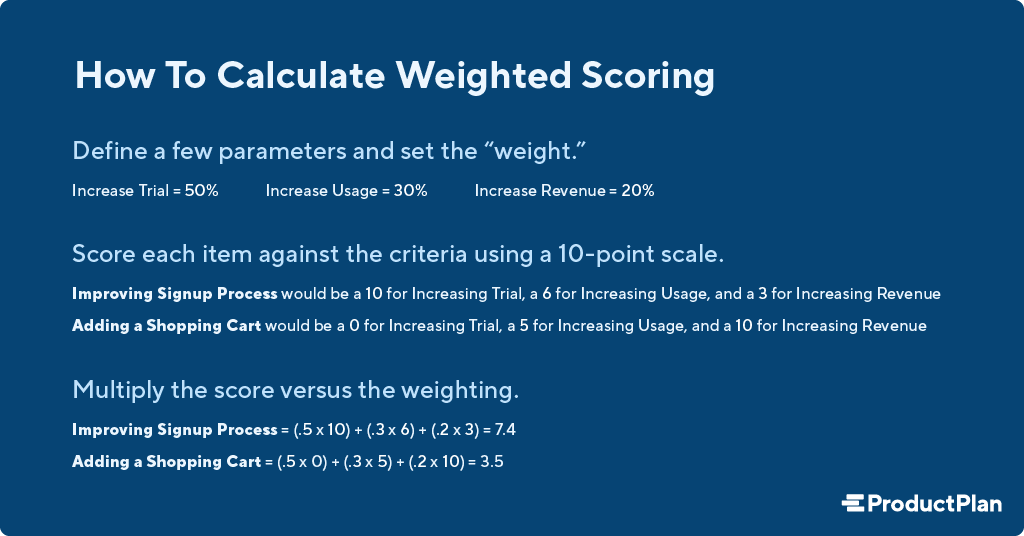
Weighted Scoring

Weighted scoring prioritization uses numerical scoring to rank your strategic initiatives against benefit and cost categories. It is helpful for product teams looking for objective prioritization techniques that factor in multiple layers of data. This prioritization framework helps you decide how to prioritize features and other initiatives on your product roadmap. With this framework, initiatives […]
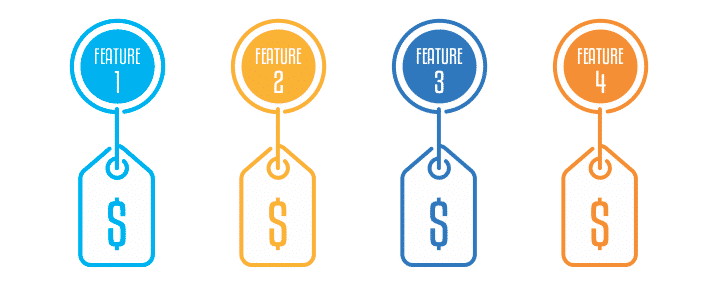
Buy-a-Feature

What is the definition of Buy-a-Feature Prioritization Model? Buy-a-Feature is one of many prioritization frameworks product managers can use. It helps organizations identify the features that customers and key stakeholders value the most. Product managers can leverage Buy-a-Feature to engage stakeholders and customers to help shape their products and prioritize features based on their expected value return. Buy-a-Feature is […]

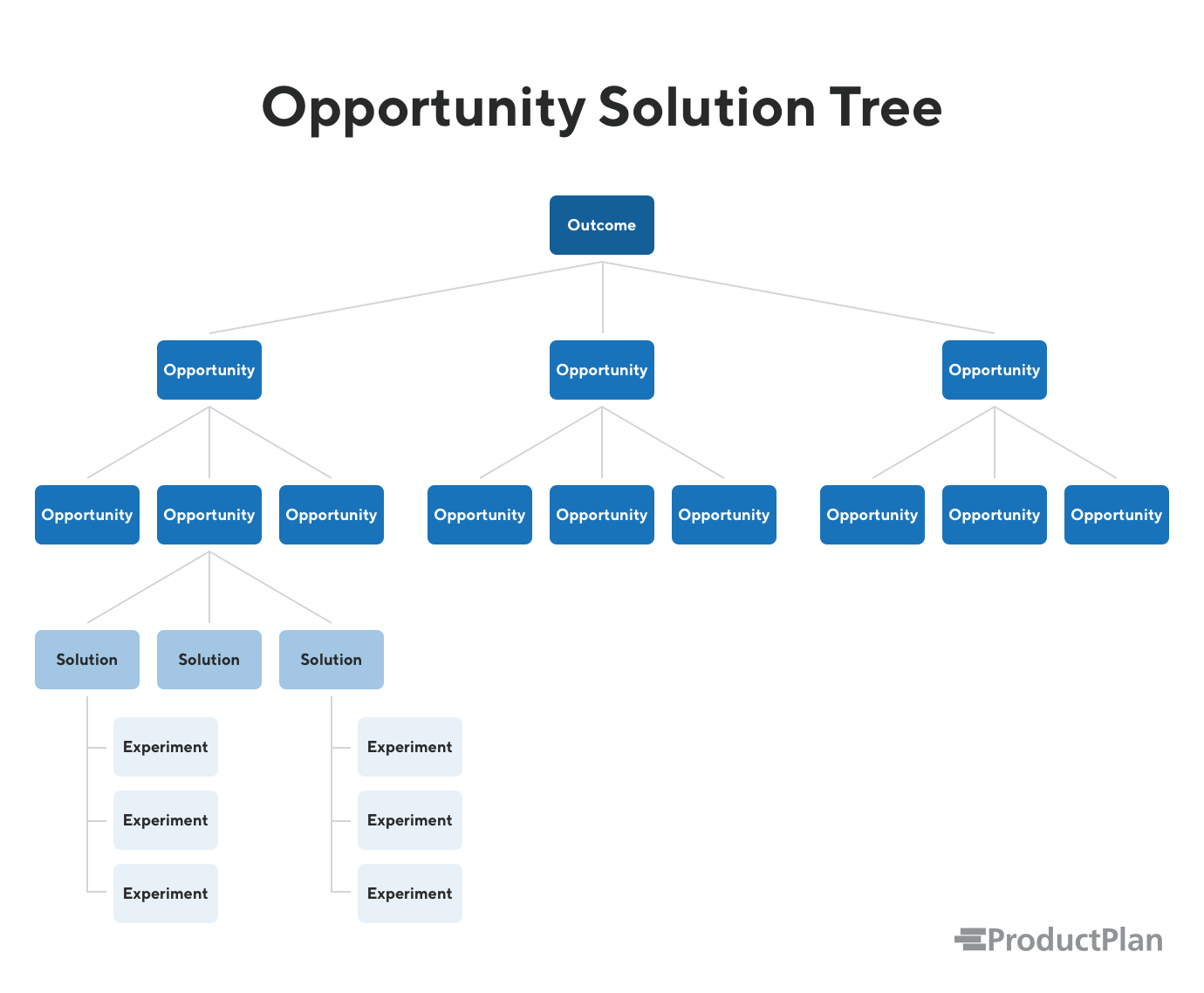
Opportunity Solution Tree

What is an Opportunity Solution Tree?  An Opportunity Solution Tree (OST) is a visual aid that helps enable the product discovery process through the non-linear organization of ideation flows, experimentation, and identification of gaps. Simply put, an OST is a visual plan for how you will then reach a clear desired outcome.  What is the […]

HEART Framework

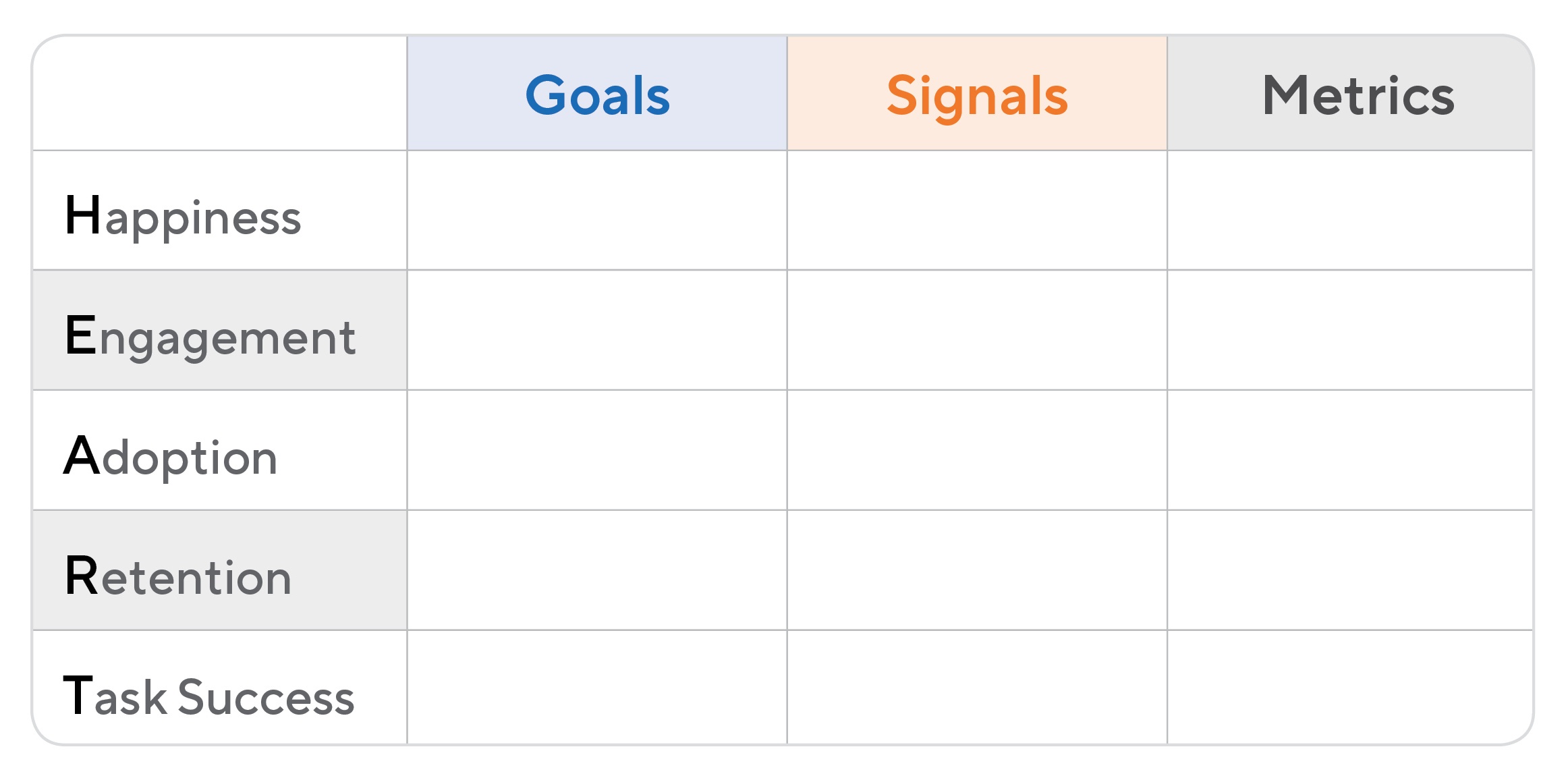
What is the HEART Framework? The HEART framework is a methodology to improve the user experience (UX) of software. The framework helps a company evaluate any aspect of its user experience according to five user-centered metrics. These metrics, which form the acronym HEART, are: 1. Happiness 2. Engagement 3. Adoption 4. Retention 5. Task success […]

Impact Mapping

Impact Mapping is a graphic strategy planning method to decide which features to build into a product. As it begins with the intended goal and extends out from there, all identified features have a direct impact on achieving that goal and a clear rationale for how they will do so. Impact Mapping was introduced to […]

Weighted Shortest Job First (WSJF)

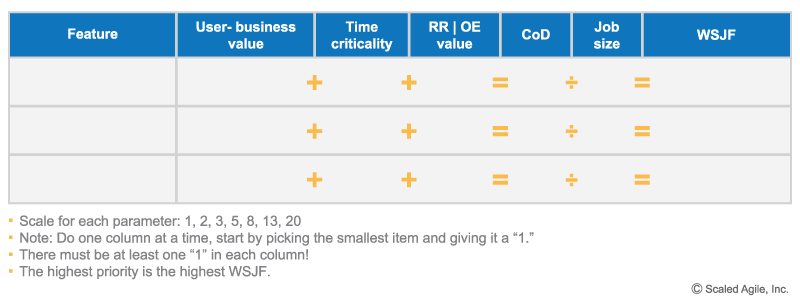
What is Weighted Shortest Job First (WSJF)? Weighted Shortest Job First (WSJF) is a tool used in the Scaled Agile Framework (SAFe) to help teams prioritize a list of initiatives. A team calculates each initiative’s score as the cost of delay divided by the job’s size or duration. The team then prioritizes those items that […]

ICE Scoring Model

The ICE Scoring Model is a relatively quick way to assign a numerical value to different potential projects or ideas to prioritize them based on their relative value, using three parameters: Impact, Confidence, and Ease. What is the ICE Scoring Model? ICE Scoring is one of the many prioritization strategies available for choosing the right/next […]

MoSCoW Prioritization

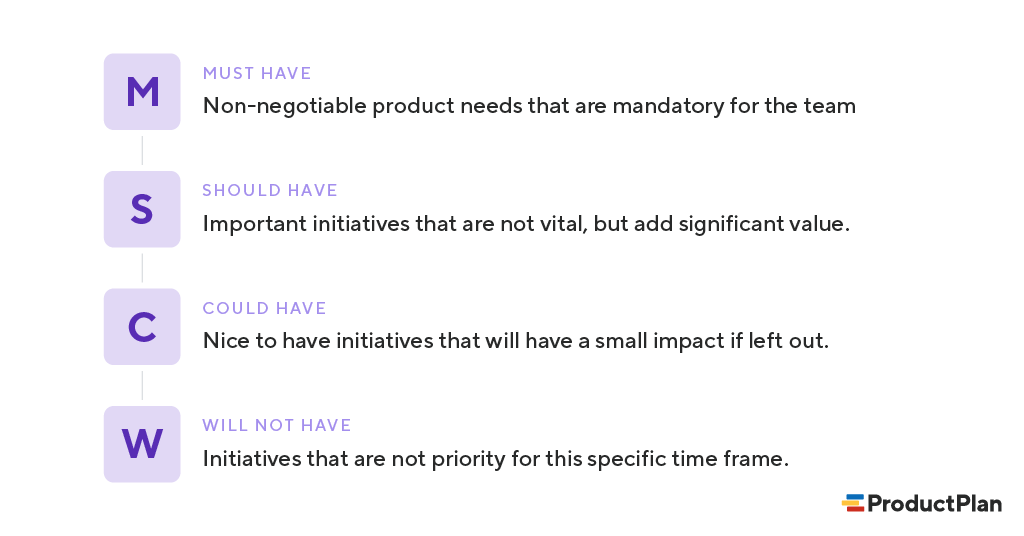
What is MoSCoW Prioritization? MoSCoW prioritization, also known as the MoSCoW method or MoSCoW analysis, is a popular prioritization technique for managing requirements.   The acronym MoSCoW represents four categories of initiatives: must-have, should-have, could-have, and won’t-have, or will not have right now. Some companies also use the “W” in MoSCoW to mean “wish.” What is […]

GIST Planning

What is GIST planning? GIST stands for Goals, Ideas, Step-Projects, and Tasks. GIST planning is a lightweight approach to product planning, with the goal of reducing management overhead, increasing velocity, and producing products that better meet the needs of the market. The intended purpose of GIST is to only build products and solutions with the […]

2×2 Prioritization Matrix

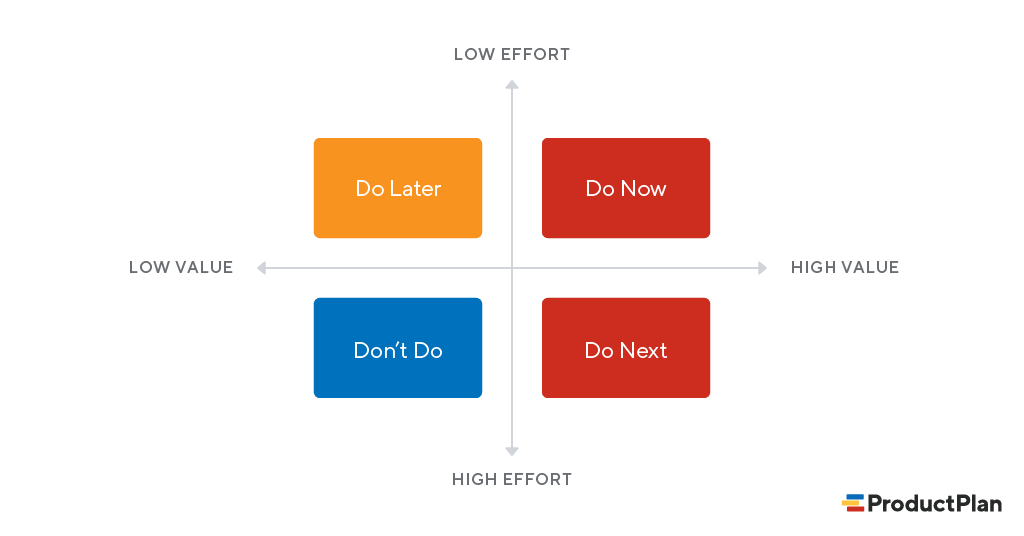
What is a 2×2 Prioritization matrix? The 2×2 prioritization method gives professionals and teams a visual framework to identify which projects to work on next. The method consists of drawing a priority matrix grid with four quadrants. The vertical axis is labeled “importance,” and the horizontal is labeled “effort.” Each quadrant in this grid, sometimes […]