
Information Flows in Product Management

What is the Definition of Information Flows in Product Management? The success of any product depends on coordination among several departments across the company. In product management, information flow refers to a two-step process for creating a shared understanding of product strategy. In the first step, the product leader gathers various stakeholders to discuss the […]

Total Addressable Market (TAM)

What is Total Addressable Market (TAM)? Total Addressable Market (TAM) refers to the maximum size of the opportunity for a particular product or solution. In other words, if every single person who could potentially find value in a product or solution purchased/started using it (i.e. 100% market share), how big would that market be? TAM […]

Scope Creep

What is Scope Creep? Scope creep is the phenomenon in which a team’s initial plan—the scope of work it agreed to complete—slowly grows to include more goals, tasks, or requirements. Teams should always be mindful of the threat of scope creep and remain vigilant against it. Any plan can be undermined or even derailed by […]

Minimum Viable Product (MVP)

What is a Minimum Viable Product? A minimum viable product, or MVP, is a product with enough features to attract early-adopter customers and validate a product idea early in the product development cycle. In industries such as software, the MVP can help the product team receive user feedback as quickly as possible to iterate and […]

Vanity Metrics

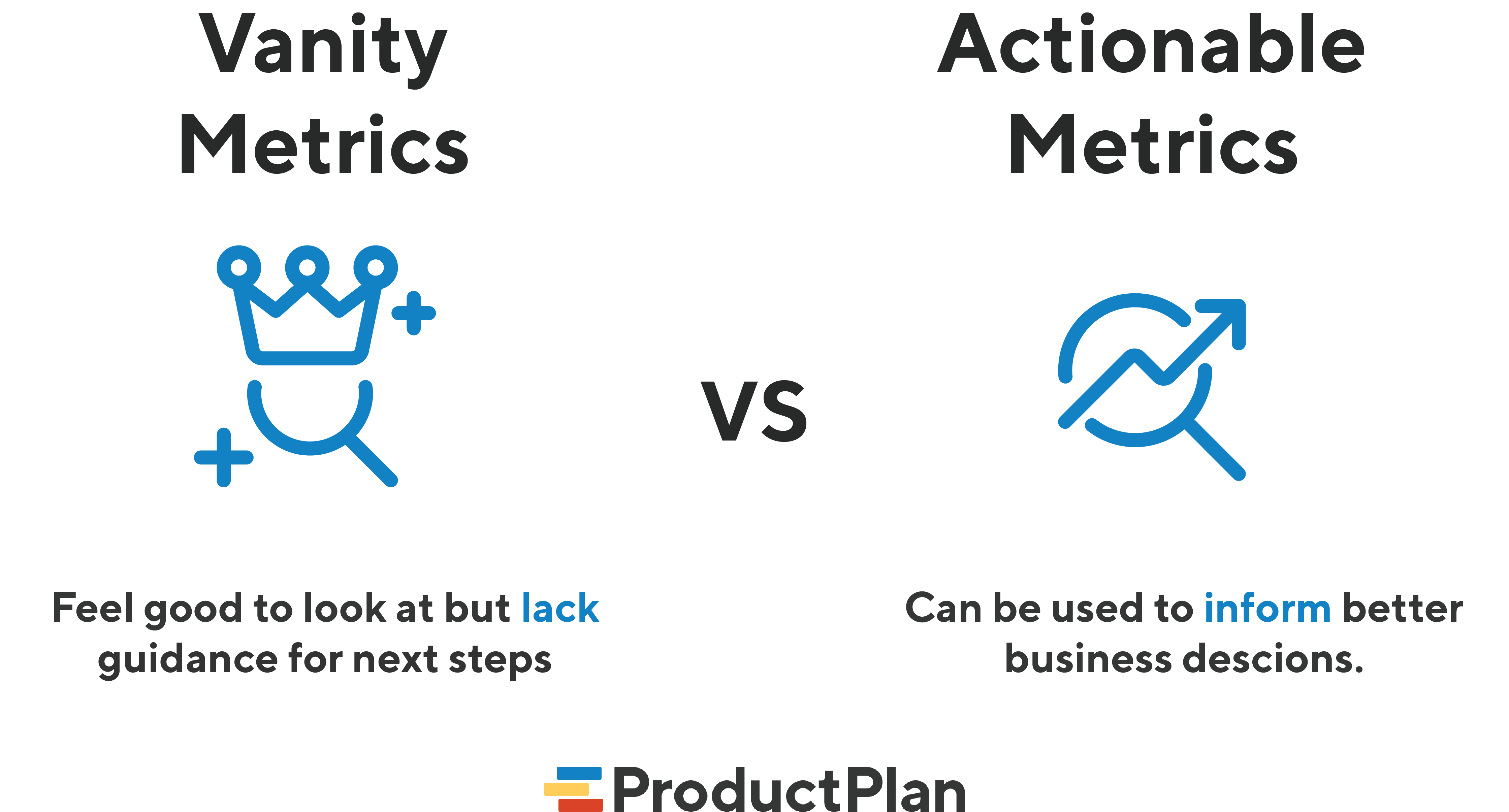
What Are Vanity Metrics? Vanity metrics are statistics that look spectacular on the surface but don’t necessarily translate to any meaningful business results. Examples include the number of social media followers or the number of views on a promotional video. While the data might seem superficially impressive, these metrics do not accurately reflect an organization’s […]

Product Profitability

What Does Product Profitability Mean? Profit is the amount of revenue that remains after accounting for all expenses, debts, and other costs. So product profitability, then, refers to how much money a product makes minus what it costs to build, sell, and support it. Businesses also refer to profit as the bottom line. Although revenue […]

Monthly Recurring Revenue (MRR)

What Is Monthly Recurring Revenue? Monthly recurring revenue (MRR) is a calculation of revenue generation by month. Many Software-as-a-Service (SaaS) companies view this as “the holy grail metric” because it conveys an up-to-date measurement of the company’s health from an income standpoint. For more in-depth insight, monthly recurring revenue can be broken into specific segments […]

Net Promoter Score (NPS)

What is a Net Promoter Score? A net promoter score is a method of using a single survey question to gauge customer satisfaction with a product. Businesses can send out this question— “On a scale of 0 to 10, how likely are you to recommend [our product or company]?”—at various stages of the customer’s journey. […]

What Is a Product Engagement Score?

Product engagement score, or PES, measures how users interact with a product. PES brings into sharp focus three key metrics—product adoption, stickiness (i.e., repeated usage), and growth. Centering on these critical metrics deepens an organization’s understanding of the customer experience. How Is PES Calculated? A product engagement score is the average of the values for […]

Objectives and Key Results

What is an OKR? Objectives and Key Results (better known as OKRs) is a management strategy for setting business objectives and measurable outcomes. It relies on set, tracked, and re-evaluated goals paired with measurable results. Andy Grove introduced OKRs at Intel in the 1970s. They spread throughout Silicon Valley in the 1990s. OKRs set qualitative […]

